









Robert Allen is a systems/platform engineer, open source maintainer, and sheep and poultry farmer in Farmville, Virginia. By day, he drives infrastructure automation for a major education technology company. By evening, he builds developer tools that solve real problems in technology and agriculture — and somehow also runs a regenerative pasture farm.
- Supply-Chain Security (current focus) — Signed, SLSA-attested, fail-closed-verified release pipelines (cosign, SBOM, provenance) as reusable org workflows; see Attested Delivery
- Open Standards for AI Tooling (current focus) — Authoring the MIF specification to make AI memory portable and interoperable
- AI Memory Systems — Building structured, persistent memory for AI agents: subcog and mnemonic
- Agentic Workflows — GitHub Agentic Workflows (
gh-aw) for autonomous, event-driven repository operations at scale - AI-Assisted Development — Claude Code plugins, agents, and multi-agent orchestration
- DevOps & Platform Engineering — Infrastructure automation, CI/CD, AWS architecture
This repository, and the projects it links to, exist first for personal interest and need. I test ideas here before I know whether they matter to anyone else, and I frequently implement proposals directly from published research: rlm-rs follows the Recursive Language Model pattern from arXiv:2512.24601, and maker-rs implements the MAKER approach to zero-error LLM execution through SPRT voting. Reading a paper and building the thing it describes is how I verify whether an idea holds up outside its own abstract.
Two areas occupy most of my attention at the moment: attested delivery (signed, SLSA-attested, fail-closed-verified release pipelines) and the Memory Interchange Format (MIF, an open specification for portable AI memory). Both stem from the same concern. Software supply-chain attacks are not a new threat, but the scale and coordination behind them have shifted from opportunistic to industrialized, and I hold this work to a professional standard because I take that shift seriously, not because anyone is asking me to.
I am fascinated by AI-assisted development and unsettled by it in roughly equal measure. I build agentic workflows, memory systems, and Claude Code tooling because I believe the underlying capability is real, and I lose sleep over that same capability because I do not believe its risks are well understood, by me or by anyone else. I also carry an unresolved tension about open source itself: I remain committed to it, while recognizing that open source is under more sustained attack today than at any point I have worked in it.
None of this is a pitch. If a problem I have solved for myself turns out to be a problem you have too, I am glad the solution is here. But the work, and the writing that accompanies it on my blog, is produced for my own benefit first and shared freely as a byproduct, not the goal. Because AI tooling is involved in how I build this, trust none of it blindly. I make every effort to keep it safe, secure, and worth something to whoever ends up using it, myself included.
Memory Interchange Format (MIF) — Portable AI Memory
The AI memory ecosystem is fragmented — Mem0, Zep, Letta, and others all use proprietary schemas with no interoperability. MIF defines a common data model with dual representations: human-readable Markdown (Obsidian-compatible) and machine-processable JSON-LD, with lossless conversion between them. Three conformance levels scale from a 4-field core to full bi-temporal provenance, decay, and embeddings, with migration guides from the major memory systems.
Status: v1.3.0 • Specification • GitHub
Attested Delivery — Signed, SLSA-Attested Release Pipelines
Software supply-chain attacks exploit an unverified assumption: that a release artifact is what its build pipeline claims it is. Attested Delivery answers that assumption with GitHub-native tooling: keyless cosign signatures, SLSA Build L3 provenance, CycloneDX SBOMs, and fail-closed verification gates, distributed as language-agnostic pipeline templates (Rust, Go, OpenTofu/Terraform IaC) rather than a hosted service. The digest is the release; anything unattested does not ship.
Status: active development • Documentation • GitHub
The intersection of cognitive science and AI systems presents a compelling question: how do we build AI that remembers meaningfully? Human memory isn't a tape recorder — it's a constructive process where our mental models (ontology) shape what we encode, and our memories reshape how we understand the world.
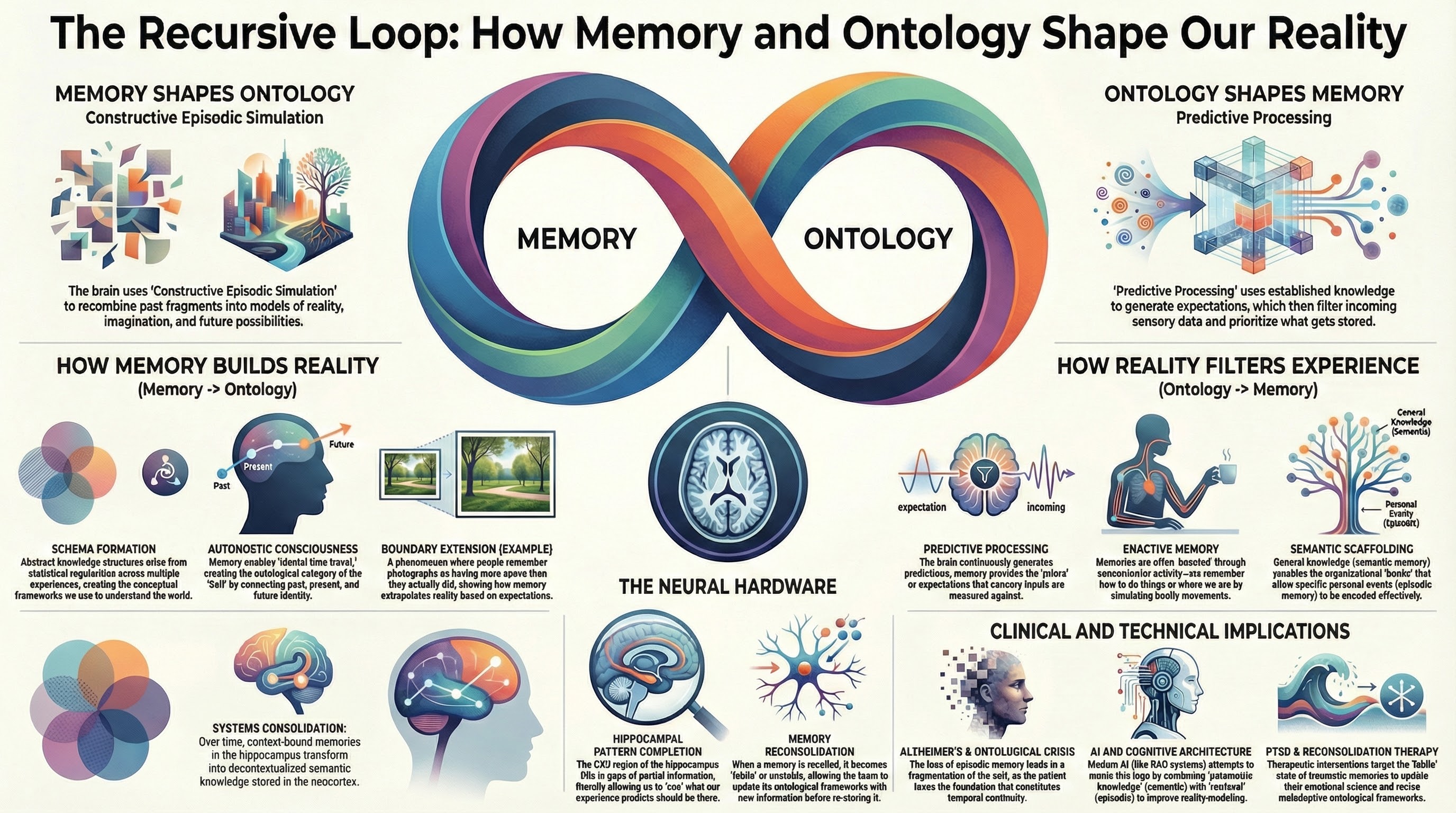
MIF grew directly from this research, the product of five-plus iterations on memory systems — subcog and mnemonic are its public expressions. Alongside them, I'm writing an academic paper measuring memory system impact across LLM models; one early finding is how much variance exists in structured recall between models in ways general benchmarks don't predict.
subcog — Persistent Memory for AI Coding Assistants
A Rust memory system that captures decisions, learnings, and context from coding sessions. Hybrid search (semantic + BM25), MCP server integration, SQLite persistence with a knowledge graph, and proactive memory surfacing. Its filesystem-native sibling, mnemonic, is a pure MIF Level 3 implementation — no dependencies, just markdown files and git.
rlm-rs — Recursive Language Model CLI
A Rust CLI implementing the RLM pattern (arXiv:2512.24601) for Claude Code — process documents 100x larger than the context window through intelligent chunking, SQLite persistence, and recursive sub-LLM orchestration. Ships with a companion plugin.
nsip — Sheep Genetic Evaluation CLI & MCP Server
A Rust CLI and MCP server for the National Sheep Improvement Program database — 400,000+ animals with EBVs, pedigrees, and performance data. Provides breeding intelligence: Wright's inbreeding coefficients, weighted trait ranking, mating recommendations, and flock summaries. nsip-example demonstrates GitHub4Farms — GitHub Issues as a farm record-keeping system with Copilot-powered genetic enrichment, accessible to farmers with no technical background.
This organization's .github repo centralizes signed, SLSA Build L3-attested, fail-closed-verified container delivery: keyless cosign signatures, CycloneDX SBOMs, provenance attestations as OCI referrers, verification gates before any publish or deploy, and change-record-gated production promotion — all consumable by any repo as reusable workflows. It also runs 17 gh-aw agentic workflows for daily triage, standup, dependency housekeeping, and retrospectives across the org.
Last updated: 2026-07-12
Ranked by recent contributions, community engagement, and development activity.
| Repository | Description | Tech | Activity |
|---|---|---|---|
| rlm-rs | Rust CLI implementing the Recursive Language Model (RLM) pat... | Rust | 📈 Growing |
| subcog | Persistent memory system for AI coding assistants. Captures ... | Rust | 📈 Growing |
| python-lsp | Claude Code plugin for Python development with pylsp/pyright... | Python | 💤 Stable |
| csharp-lsp | Claude Code plugin for C# development with OmniSharp LSP and... | C# | 💤 Stable |
| maker-rs | Zero-error LLM execution via SPRT voting. Rust library and M... | Rust | 💤 Stable |
| rust-lsp | Claude Code plugin for Rust development with rust-analyzer, ... | Rust | 💤 Stable |
| mcp-bundle | Claude Code plugin and GitHub Actions workflow for packaging... | Shell | 💤 Stable |
| yaml-lsp | Claude Code plugin for YAML development with yaml-language-s... | Unknown | 💤 Stable |
No new repositories in the last 90 days.
Languages        Rust | Python | TypeScript | Go
Infrastructure   AWS | Docker | Kubernetes | Terraform | GitHub Actions
AI Integration   Claude Code | GitHub Copilot | MCP Protocol
Supply Chain     cosign | SLSA | CycloneDX | OCI referrers
Specifications   MIF (mif-spec.dev)
Platforms        Linux | macOS | AWS (Solutions Architect certified)
- Developer Experience First - Tools should reduce friction, not add it
- Automation Over Documentation - Encode knowledge in code
- Open by Default - Share solutions that might help others
- Practical Over Perfect - Ship working software, iterate based on usage
- GitHub Issues - For project-specific discussions
- Pull Requests - The best way to propose changes
- LinkedIn - Professional networking and collaboration